
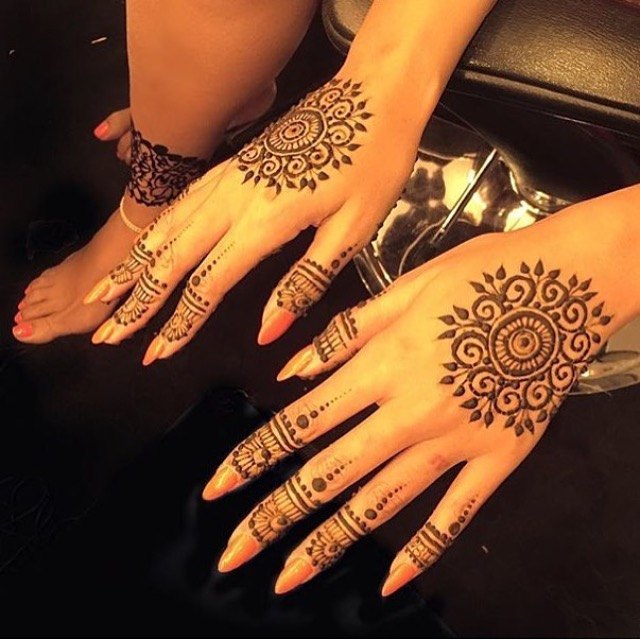
Before Ziba Beauty was famous for brows, it was famous for henna. Our founder Sumita Batra literally wrote the book on it — The Art of Mehndi, published internationally and reviewed in People Magazine, which printed Madonna’s own words about Sumita’s work: “When Sumita hennas my hands and feet, I am transported to another time and place.” Years later, when Coldplay’s “Hymn for the Weekend” video needed henna worthy of Beyoncé, the hands you saw on screen were painted by Sumita.
That is the tradition behind every mehndi appointment at Ziba. And with the festive season arriving — Navratri, Karwa Chauth, Diwali, and wedding season beyond — this is the moment to understand what mehndi is, and why it belongs at your next celebration.
What Mehndi Actually Is
Mehndi is the ancient art of adorning the skin with paste made from crushed henna leaves. As the paste rests on the skin, it leaves behind a stain — first bright orange, deepening over two days into a rich red-brown — in patterns that have carried meaning across South Asia, the Middle East, and North Africa for thousands of years. A lotus for purity. A peacock for beauty. Hidden initials for a spouse to find. Every element in a traditional design says something.
It is not a tattoo and involves no needles: natural henna sits on top of the skin and fades gracefully as skin renews itself, usually over one to three weeks.
The Occasions
- Weddings: the bride’s mehndi is the centerpiece — intricate, unhurried, often hours in the making — with simpler designs for the bridal party. Tradition holds that the deeper the stain, the deeper the love.
- Karwa Chauth: hands adorned before the fast and the moonrise — one of the most beloved mehndi occasions of the year.
- Navratri and Diwali: festive designs for nine nights of dance and the festival of lights.
- Any moment worth marking: baby showers, graduations, birthdays — mehndi has never needed permission to be joyful.
What to Expect at Your Appointment
A simple design for one hand takes minutes; full bridal hands and feet are a session to savor — bring music, bring your people. The paste needs to stay on as long as possible after application (two to six hours is ideal; overnight is a bridal tradition). Your artist will talk through placement, density, and how much time you have before your event.
Making the Stain Last
- Keep the dried paste on as long as you can, then scrape it off rather than washing it off — and avoid water on the design for the first several hours after removal.
- A traditional lemon-sugar seal (your artist will apply it) keeps the paste adhered and darkens the result.
- Warmth deepens the stain; harsh soaps, chlorine, and exfoliation fade it faster.
“Mehndi is where Ziba began. Threading built the studios — but henna carries the celebrations.” — The Ziba Family
A Note on Natural Henna
Ziba uses natural henna — the way it has been prepared for centuries. If you ever encounter “black henna” elsewhere, be cautious: the jet-black instant stain typically comes from PPD, a chemical dye that can cause serious skin reactions. Real henna is never black and never instant. The patience is part of the art.
Festival season books quickly — reserve your mehndi appointment early through our Customized Beauty Services, and bring your celebration to the artists who brought mehndi to the mainstream.