
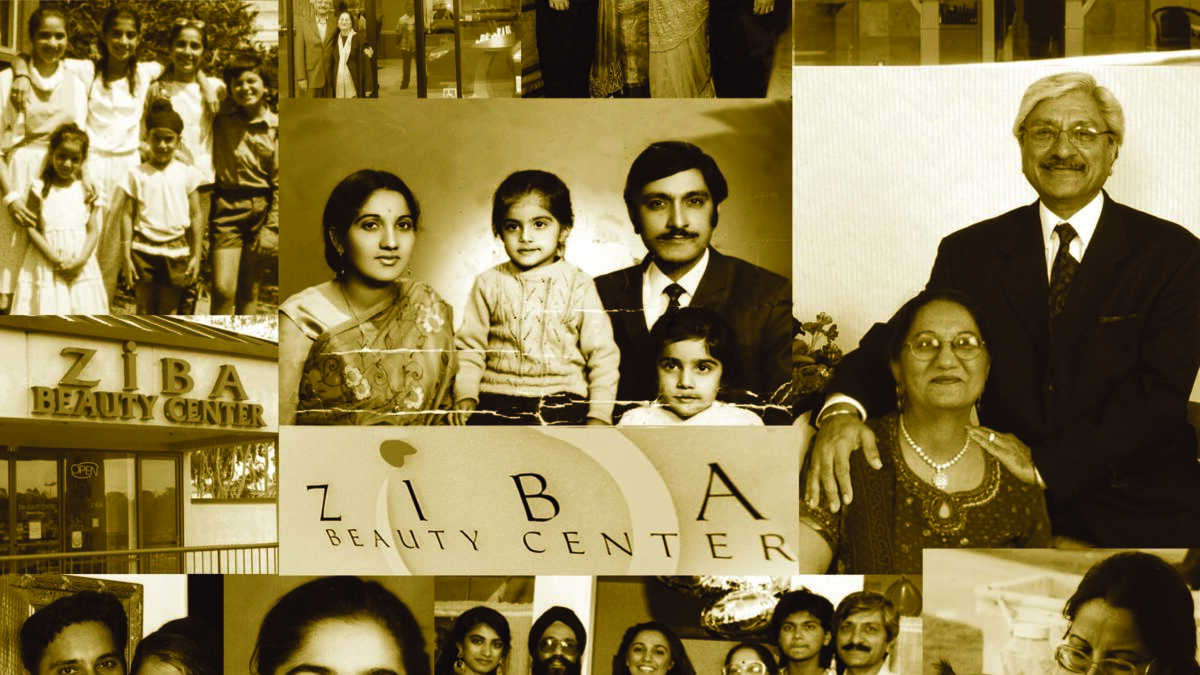
Threading was a centuries-old custom passed down through generations of families in South Asia, Persia, the Arab world, and Central Asia before it became a popular beauty service found in salons across America. Ziba Beauty introduced a custom that predates tweezers to American beauty culture when it opened its first studio in 1988 in Artesia, California, making it the country’s first professional eyebrow threading studio.
Where Threading Comes From
Threading’s exact origins are disputed by historians, but most evidence points to ancient Persia (modern Iran) and the Indian subcontinent, where the technique was practiced as a form of grooming ritual for women preparing for marriage ceremonies. Historical records suggest the practice dates back at least 6,000 years, making it one of the oldest hair-removal methods still in regular use today.
In many South Asian and Middle Eastern cultures, having one’s facial hair threaded for the first time was and in some traditions, still is considered a rite of passage marking a girl’s transition into womanhood. The practice was not merely cosmetic; it carried deep cultural and familial significance.
The Technique Has Barely Changed
What is remarkable about threading is how little the technique itself has evolved over thousands of years. A single piece of 100% cotton thread, twisted and doubled, is still the only tool required. No electricity, no heat, no chemicals just the practiced hands of a skilled artist and a simple piece of thread. The same motion that ancient practitioners used is the same motion our Ziba artists use today.
“Threading is pure technique. There is nothing to hide behind: no product, no tool, just skill. That’s why training matters so deeply to us at Ziba.” — Ziba Founder
Ziba’s Role in Bringing Threading to America
When Ziba Beauty opened in the late 1980s, eyebrow threading was virtually unknown in mainstream American beauty culture. The Artesia studio located in the heart of what is now known as “Little India” in Southern California was initially patronized almost exclusively by the South Asian immigrant community who recognized and trusted the technique.
Over the following decade, word spread. Threading’s superior precision, its gentleness on skin, and the dramatic results it produced attracted clients from every background. By the early 2000s, threading studios had begun appearing across the country, and major beauty publications were calling it “the new way to do brows.” Ziba was already 15 years in.
Why We Call It an Art Form
At Ziba Beauty, we’ve always called our practice the Art of Threading® and it’s not just branding. Threading done at its highest level requires an understanding of facial geometry, hair growth patterns, skin tension, and the physical rhythm of the thread itself. A Ziba-certified artist completes rigorous training before they ever work on a client’s brows, because we understand that what we’re doing carries real meaning to the heritage of the practice and to the person in the chair.
Thirty-five years later, with over 10 million brows shaped and a third generation of the founding family now working in the business, that commitment to craft hasn’t changed. The thread is still cotton. The technique is still passed hand to hand. And every brow is still treated as a work of art.